Wednesday, July 25, 2012

Dual Citizenship in a Post-Federation Era

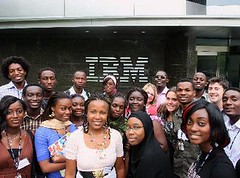
African students outside of IBM Headquarters
African students outside of IBM Headquarters (Photo credit: citizenIBM)
Africans have been migrating to neighboring countries and overseas in greater numbers than before. They have been taking up citizenship in countries other than the country of their birth. This new African Diasporas are now increasingly calling for Dual Citizenship. Dual Citizenship is a situation where an individual can be a citizen of two countries. The call for Dual Citizenship has been growing in Africa from the African voluntary Diaspora over the past few years. The unprecedented voluntary movement of African people within the continent and outside the continent is being facilitated by increased access to mass transportation due to globalization. The African Diasporas voices have not fallen on deaf ears. Currently, nearly half of the African nations offer Dual Citizenship for their Diasporas. The African Union has  now also  officially recognized the economic and social benefits of engaging the African Diasporas. The AU has gone as far as to recognize that the involuntary African Diaspora that left Africa in bondage (i.e. African-Americans, Afro-Latinos, Afro-Caribbeans etc) is the sixth region of the African Union’s organizational structure.  In the spirit of Pan Africanism, countries like Ghana have extended citizenship rights to the involuntary African that wish to repatriate to Ghana. In Southern Africa, the call for Dual Citizenship can be heard in the countries that formally comprised the Federation of Rhodesia and Nyasaland, namely, Nyasaland (Malawi), Northern Rhodesia (Zambia), and Southern Rhodesia (Zimbabwe).


English: Map of the Federation of Rhodesia and...
English: Map of the Federation of Rhodesia and Nyasaland. (Photo credit: Wikipedia)
In the 1960s Malawi was at the forefront of dissolving the colonial Federation that brought modern day Zambia, Zimbabwe and Malawi as one nation under British colonial rule. Whilst the hatred for this federation existed in all three countries, the resistance to the federation was heard the loudest in Malawi. Malawi was not a settler colony so Malawians feared white settlers moving in to its borders. Malawians were also being used as a source of labor for Zimbabwe and Zambia and this led to the underdevelopment of Malawi. Most of the farms and industries in the federation were being formed outside of Malawi’s borders. Therefore Malawians were very opposed to the federation. It was little Malawi, a country one third the size of both Zambia and Zimbabwe, that was persistent  and instrumental in successfully ending the forced federation by 1964. It is therefore very ironic that years later, due to globalization, the people of the same countries are all calling for Dual Citizenship - a distinct step towards becoming more unified. Migration between the three countries has been profound and large settlements of migrants from the other two countries can be found in each country. In Zambia, Dual Citizenship has already been tabled in parliament and the first draft of their constitution includes a provision for Dual Citizenship. In Zimbabwe, a constitutional overhaul was also supposed to usher in Dual Citizenship as an unalienable right. It appears that the provision has left aspects of Dual Citizenship open to subjectivity in the final draft of new constitution.  The draft constitution recognizes that Zimbabweans cannot lose citizenship by acquiring foreign citizenship but adds that  Dual Citizenship would be regulated by Acts of parliament. For the majority of Zimbabweans, it means that they can have Dual Citizenship. For Zimbabweans born outside of Zimbabwe though, it may be an area of concern depending on future acts of parliament.  Lastly, in Malawi, the call for Dual Citizenship is still in its exploratory phase for the government. No formal bill or constitutional amendment has been tabled to parliament although various organizations and individuals have promoted it in the past. The current call for Dual Citizenship there is being pushed forward by non-governmental advocacy groups. This includes the Campaign for Dual Citizenship, a transnational advocacy group based in the U.K. that has an online petition form and is also petitioning the government for Dual Citizenship. Half way across the globe, the Malawi Washington Association is also advocating for Dual Citizenship through the Movement for Dual Citizenship initiative.  The Malawian Diaspora hopes to have a  bill considered in parliament like in the case of Zambia and Zimbabwe. Dual Citizenship however is being promoted in all three nations, largely due to the persistence of their respective growing Diasporas.


English: Flag of the Federation of Rhodesia an...
English: Flag of the Federation of Rhodesia and Nyasaland  (Photo credit: Wikipedia)
The concepts of citizenship and Dual Citizenship in particular, have become problematic for African nations under the nation-state system. Traditional African cultures in the region allowed for Dual Citizenship. During the pre-colonial era of kingdoms and chiefdoms traditional leaders had accepted Dual Citizenship. Belonging to a particular political unit was not as rigid as it was under the nation-state system that was introduced in the colonial era. As an example, if one was a Chewa through one parent, one would also be recognized as a Bemba through the Kingdom or Chiefdom of another parent. This means that multiple citizenship across groups were possible. The modern day movements toward Dual Citizenship for this region are therefore also rooted in pre-colonial African tradition. Relaxing of rigid citizenship laws for Malawi, Zambia and Zimbabwe is therefore a step towards addressing the malaise of the colonial borders in the region. Although the idea of the federation itself was not bad with respects to promoting unification of nation-states, the federation itself was intended to serve the particular interests of the colonial government. It was also forced the new political units in Africa that consisted of disparate people to in to yet another forced political unit. Dual Citizenship however, will serve the interests of the governments and citizens of the three countries respectively. It will also bring together Africans in a voluntary manner. Dual Citizenship can therefore be considered as a viable alternative to persistent calls to redraw Africa’s borders altogether. It will help strengthen the region’s economic viability. For the modern day nations of Zambia, Zimbabwe and Malawi, fighting against unification is no longer relevant in a globalized world where regional blocs are being formed. Taking steps toward Dual Citizenship is in the region is a step in the right direction.

Thursday, May 31, 2012

The Way Forward for Africa? East or West

The Rhodes Colossus: Caricature of Cecil John ...
The Rhodes Colossus: Caricature of Cecil John Rhodes, after he announced plans for a telegraph line and railroad from Cape Town to Cairo. (Photo credit: Wikipedia)

With China banging on Africa’s doors, the debate on whether Africa should lean towards the East or the West continues in many African nations. This is however a long standing debate that is not new to the continent. Africa has always been forced to decide between two seemingly opposing philosophies. Through historical events like colonialism, the Cold War, and now, neo-colonialism, African countries have time and time again been faced with the dilemma of choosing allies in a world where those allies are first and foremost looking after their own interests. This means that Africa has been reactive rather then proactive in deciding its future and alliance. Being caught between a rock and a hard place has meant that Africa has not benefited significantly from making these alliances and should not expect to in the future unless it chooses to lean towards Africa. The great philosopher and Pan Africanist, Kwame Nkrumah summed up the direction for Africa in a single statement: “We face neither East nor West; we face Forward”. Through these words, Nkrumah verbalizes where Africa’s focus should be – in Africa.In this new globalized world, it is ever more important that African countries look out for their own interest and that of their immediate neighbors. 

Every nation in the world looks out for its own interests - so does every continent. African countries should also be looking out for their own interests and that of their people. In the political economy, African nations have become perpetual pawns in foreign diplomacy. They have been forced to choose a side at times when they don’t want to and don't need to. During the Cold War African nations were under pressure to lean towards Russia or the global North In contemporary times, Russia has been replaced with China. This has made it seem like there are only two choices.  African countries should no longer have to make these tough decisions that don’t benefit them in the long run. They should band together so that they can speak with one united voice and so strengthen their bargaining power. There is always an alternative - a third choice when the options in laid out in front of us aren't good enough. There is no reason why Africa has to choose a side. Therefore African countries should consider not choosing at all! They can take a similar position as Switzerland and remain “neutral” in the current global world order if they want to improve their situation- but they can only do this together. African nations should create alliances with both the global North and the Global South and take a position of neutrality. We should embrace the relationships with China and embrace the relationships with the West. The West keeps pointing fingers at China and warning African countries about China, however, there was no one there to warn us against the West when it was scrambling for China. Essentially, we are swamping one sphere of influence for another. With regards to Africa, the decision to lean West or East does not make a significant difference if we are not looking out for Africa's interest.

China has done a lot for the continent, and we should not be forced to abandon this relationship. However, every African nation should be diligent about negotiating contracts with China so that it is a win-win situation. Similarly, with our long standing allies in the West, African nations should likewise be diligent in the forms of contracts it negotiates with them as well. We would be naive to think that our interests are best served by leaving the terms of the relationship up to others.

This approach however means that African nations will need to take an introspective look at their own nations and decide where they want to be in the future. They can then decide what nature of relationship they want with the East and the West. Then they can work towards achieving their visions when they sit at the bargaining table. It is up to the leaders and people of Africa to decide who their allies will be and what type of alliances they want to create. This begins by first mending alliances with their immediate neighbors so that they can cooperate on matters of common interest. Africa should not have to decide on whether to lean East or West – this is not the only option.

Thursday, April 19, 2012

Is Africa Ready for Female Leadership?

CAPE TOWN/SOUTH AFRICA, 4JUN08 - FLTR: Pierre ...
CAPE TOWN/SOUTH AFRICA, 4JUN08 - FLTR: Pierre Nkurunziza, President of Burundi, Bingu Wa Mutharika, President of Malawi, Thabo Mbeki, President of South Africa, Klaus Schwab, Founder and Executive Chairman, World Economic Forum, John Agyekum Kufuor, President of Ghana, and Raila Amolo Odinga, Prime Minister of Kenya, captured during  the World Economic Forum on Africa 2008 . Image: Eric Miller (Photo credit: Wikipedia)
As Joyce Banda, Malawi’s First Female President and Head of State, was sworn in this month, many Malawians were ecstatic. During the spectacle that occurred after late President Bingu wa Mutharika’s cardiac arrest which resulted in his death, foreign journalists debated whether Malawi was “ready” for a female president. Some Malawians asked the same question, speculating that a constitutional coup would occur that would prevent her from assuming this role. Forgotten was the role that women such as former Official Hostess (First Lady), Cecilia Kadzamira played in the nation. She was the most powerful woman in Malawi for three decades. Towards the end of Kamuzu Banda’s presidency, she essentially run the country and was the de facto president. Therefore in recent history, Malawi has had a precedence of a strong female leader. However, what was also forgotten was a long tradition of female leadership in Malawi and Africa as a whole that came before her. As Africans, I think that it’s important for us to have a common, accurate and collective memory with regards to historical events on the continent, including societal issues. As Malawi ushered in the First Female Head of State in SADC, the media and public were mis-educating each other about the real progress of female leadership in Africa in various ways.


Joueur d'Uruncungo (Player of Uruncungo)
Joueur d'Uruncungo (Player of Uruncungo) Women played an active role in business and trade in the markets (Photo credit: Wikipedia)
I will start with the terminology. In order to have a head of state, there needs to be a state. Prior to the Berlin Conference of 1884, where African states originated, there were no states in Africa.  However, there were other forms of political units that had leadership like Kingdoms, Empires, Chieftaincies, clans, or ‘tribes’. Many of these political arrangements in Africa were matrilineal (traced ancestral descent through the maternal line), matrilocal (husband goes to live with the wife’s community), or matriarchal societies (A woman who rules a family, clan, or tribe). These arrangements lead to a long list in history of African leaders like Cleopatra of Egypt, Queen Nzinga M’Bandi of Angola, Princess Grace Matamba of Congo, Queen Nana Yita of Nsuta (Ghana), Queen Nana Aberewa Ampen of Juaben (Ghana), Sultan Fatimah of North Zanzibar (Tanzania), Ret Abudok nya Bwoc of Shilluk (Sudan). Over the years this history of female leadership in Africa, has continued in many rural areas. Therefore, if we are to only look at our history, we may conclude that Africa has always been ready.

In fact, prior to colonialism Africa’s real traditional culture, was more gender progressive then the hybrid system that was introduced during the colonial era. Traditional African culture has always been more gender neutral then the cultures of the global north where patriarchy and capitalism have created inequalities that have challenged for female leadership. Gender roles in African culture have traditionally more fluid. Africans women were serving as spiritual leaders (contemporary day pastors, priests), healers or sangomas, (midwives, nurses, doctors), herbalists (pharmacists), traders (business women) and other prominent positions. Women were also able to own property and had political participation.  During this same era, western women were not able to play these roles in their own societies. Therefore when colonialism was introduced state sponsored patriarchy, African women legally lost their social and political positions. African countries became states during the colonial era where Africans were not in charge of their own states. This made the ascension of African women difficult because both African men and women could not be heads of state. They could not practice their traditional leadership roles that included women under this new system. This means that women’s leadership in Africa has been more about reclaiming rights we lost under colonialism rather than achieving them for the first time. In contemporary times, challenged with regaining female leadership on the continent under new political formations, the modern state, African countries have made considerable gains. I compiled a descriptive list of contemporary women Heads of State in Africa that have been head of state that we can draw on to begin to pull our collective memories together:

1. Ruth Sando Fahnbulleh Perry (Liberia) – Appointed, First Female Head of State in Africa, First Female Head of State in West Africa.
2. Ellen Sirleaf-Johnson (Liberia) – Elected, Second Female Head of State in Africa, First Elected Female Head of State in Africa, Second Female Head of State in West Africa.
3. Joyce Hilda Mtila Banda (Malawi) – Appointed, Third Female Head of State In Africa, Second Appointed Female Head of State in Africa, First Female Head of State in Malawi, First Female Head of State in Southern Africa.


Rice (left) and Laura Bush (second from the ri...
Rice (left) and Laura Bush (second from the right) meet Liberian President-Elect Ellen Johnson Sirleaf (center), the world's first black female president, before Sirleaf's inauguration in Monrovia on January 16, 2006 (Photo credit: Wikipedia)
In addition, there have been African women that have acted as head of state like President Rose Francine Rogombé of Gabon who served as interim head of state and Sylvie Kinigi of Burundi, and Carmen Pereira, of Guinea Bissau. Perhaps, the difficulty in including them on the list is can be explained by terminology. The titles ‘Interim’, ‘Acting’, and ‘Appointed’ Heads of State may suggests a short term, temporary arrangement. It can also imply that the person is not the ‘real’ head of state. What is also problematic is confusion that arises over who is the head of state in political units. African countries have mixture of heads of state that have the title of President or Prime Minister – some countries others have both positions. However there is evidence that there is room to extend this list in the African context. Therefore, as journalists frantically try to meet deadlines in the corporate media houses, there is little time for them to take an accurate survey or analysis of female leadership. In addition, many journalists in the global North already have a limited knowledge of Africa. They seldom take the time to do their own research on the history of the continent outside of highlighting data centered on societal factors like the level of poverty, disease and women’s oppression. Therefore, this often leads to the misrepresentations and distortion about the dynamics of topics like gender and leadership on the continent. Many have never heard of Ruth Perry, the first African Head of State in Africa (1996-1997) who was succeeded by Charles Taylor in Liberia. She is sometimes not regarded as Head of State, however, many do differentiate Sirleaf-Johnson by noting that Sirleaf-Johnson is the first elected head of state. However we must decide how we want Perry to be remembered because she is in danger of being forgotten in our collective memories in spite of this achievement. In addition, because of the global practice of sourcing news from a few media outlets like Reuters or the Associated Press, at times, African journalists often source their material from these media outlets and end up unintentionally doing the same. This is why Africans need to have a collective memory about their history in terms of female leadership.


Queen Nzinga in peace negotiations with the Po...
Queen Nzinga in peace negotiations with the Portuguese governor in Luanda, 1657. (Photo credit: Wikipedia)
It is important to note that there have been a countless number of women that have been serving as Prime Ministers, Presidents (that may not necessarily be head of state) or vice-president in Africa in recent history. However, there needs to be recognition that these women, including Sirleaf, Perry and Banda, are following in the footsteps and tradition of Africa’s long record of female leadership. In order to answer burning questions about our countries’ “readiness” for female leadership, we need to understand our own histories outside of the ‘popular imagination’ of what Africa is. This question is based on assumptions on the level of gender equality in Africa. The assumption is that African men and African societies are sexist due to gender inequalities inherent or rooted in African traditional societies. This is simply untrue. African women in traditional societies have been leaders, healers, priestesses, and property owners. These rights that were increasingly denied to them under colonial patriarchy, and this then carried on beyond colonialism. African Women largely lost their rights and never regained them. There are several accounts of women’s participating in the political process by signing treaties as well as accounts of colonialist refusing to negotiate treaties with African women. These attitudes reflected gender relationship inequalities in western societies. These attitudes also continue to affect western women in countries that are highly capitalist and therefore, highly patriarchal. Therefore, our challenge today is to reclaim and regain traditional role as leaders for African women. Our challenge is also to see African tradition as progressive in terms of gender equality. However, we must have a collective memory with regards to our histories and herstories. This means learning about African history and recognizing the achievements of all our women.

*A version of this article appeared on the blog Africa on the Blog.
Saturday, March 31, 2012

African Madness: Marching towards the NCAA

LOUISVILLE, KY - FEBRUARY 12:  Peyton Siva #3 ...
LOUISVILLE, KY - FEBRUARY 12: Peyton Siva #3 of the Louisville Cardinals shoots the ball while defended by Baye Moussa Keita #12 of the Syracuse Orange during the Big East Conference game against at the KFC Yum! Center on February 12, 2011 in Louisville, Kentucky. (Image credit: Getty Images via @daylife)
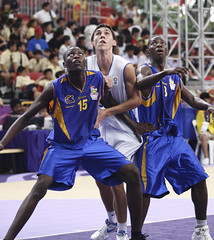
As I was watching the American NCAA (National Collegiate Athletic Association) college basketball tournament, dubbed  "March Madness", I noticed that the team I was supporting, Syracuse University, had a player with the same last name as great African musician, Salif Keita. I knew instantly that this player was a son of the continent.Typically, I am used to seeing several African players in sports like soccer (what the rest of the world’s calls football), rugby, and of course, track. As the tournament went on, I noticed a number of names that stood out as possibly being of African origin. I started to wonder how many players were of African descent in the tournament. There seems to be a noticeable growth of the number of Africans playing in the NCAA (see full list of African players in division one of the NCAA). In looking at the compiled list of Africans in this year’s NCAA tournament (see below), it looks like players from West Africa make up the majority of this category - with Nigeria taking the clear lead. Other players from Senegal and Cameroon are also represented in strong numbers. There is a noticeable absence from players from Southern Africa (Countries like Botswana, Namibia, Malawi, Lesotho, Zimbabwe, and Zambia) There is only one player from this region represented who is from South Africa. In part, it seems to be representative of breakdown in numbers of the wider African immigrant population in the U.S.  The  list of African players in this year’s NCAA consists of  54 African student-athletes. When considering the numbers of Africans in the U.S., this is a significant proportion. This includes African-born immigrants and non-immigrants as well as first generation Africans in America. It is going to be interesting to watch how many of these players  will march towards the professional league, the NBA. 

It seems that there is corresponding large boom in the popularity of basketball in Africa, particularly and the (voluntary) African diaspora.
Day 4 Basketball (18 August 2010)
Day 4 Basketball (18 August 2010) (Photo credit: Singapore 2010 Youth Olympic Game
Although there has been a tradition of basketball on the It seems that there is corresponding large boom in the popularity of basketball in Africa. continent for a long time, basketball in Africa has marched forward. Basketball however has not reached the same frenzy and madness centered around soccer, but is making its mark. Basketball is probably slower to penetrate in Africa because it requires equipment (the hoop) that cant be easily improvised. In  soccer  one can use two bottles, sticks ... etc.. (there are endless possibilities ) to create goals. Basketball is also largely dominated by America and the NBA. An African basketball tournament that has also been taking place in Africa since 1961 officiated by the International Basketball Federation or Fédération Internationale de Basketball (FIBA) - Africa. Many African teams also participate in basketball in the Olympics. However, the NBA arguably remains the most prominent of the basketball tournaments. Therefore penetration to the NBA is no easy feat. Similarly, playing for the NCAA is very competitive. It will be useful to keep track on this recent surge of players and how they will influence basketball on the continent. It is worth considering though if it is the growing popularity of the game that’s influencing the number of players that are choosing to play the game. Whether it’s African players influencing the popularity of the game or the popularity of the game influencing a rise in players, basketball is having an impact on Africans.  It will be useful to also keep track of how many of these player play in the NBA in the future.
Dikembe Mutombo playing with the Houston Rockets
Dikembe Mutombo playing with the Houston Rockets (Photo credit: Wikipedia)

I was able to locate one list of African basketball players in the NBA compiled in 2008 (See I’m an African in New York). I was not able to find an updated list therefore some of the players on the list may not be playing in the NBA any longer. However, this list includes the players like: Luol Deng, Chicago Bulls  (Sudan), Desagana Diop, Dallas Mavericks – (Senegal), Ike Diogu, Indiana Pacers  (Nigeria), Kelenna Azubuike, GS Warriors  (Nigeria), Emeka Okafor, Charlotte Bobcats  (Nigeria), Thabo Sefolosha, Chicago Bulls (South Africa), Dikembe Mutombo, Houston Rockets (DR Congo), Pops Mensah-Bonsu, Dallas Mavericks (Ghana), Michael Olowokandi, Boston Celtics (Nigeria), Mouhamed Sene, Seattle Supersonics (Senegal), Pape Sow, Toronto Raptors – Senegal, Ime Udoka, Portland Trailblazers (Nigeria) and Didier Ilunga-Mbenga, Dallas Mavericks (DR Congo).  In the next four years there should be more players that will join this list of Africans in the NBA. Below is a list of the African players in this year’s tournament and the countries they represent (the names in bold are rising stars likely to make the draft:

West Region (U.S.)
  1. Teeng Akol Western Kentucky (Sudan)
  2. O'Karo Akamune (Nigeria)
  3. Kene Ayigbo Western Kentucky (Nigeria)
  4. Melvin Ejim Iowa State (Nigeria)
  5. Alex Oriakhi Uconn (Nigeria)
  6. Ehimen Orukpe Wichita State (Nigeria)
  7. Osamuede Egharevba Wichita State (Nigeria)
  8. Teddy Okereafor VCU (Nigeria)
  9. Victor Oladipo Indiana (Nigeria)
  10. Christian Kabongo New Mexico State (Congo)
  11. Bandja Sy New Mexico State (Mali)
  12. Tshilidzi Nephawe New Mexico State (South Africa)  
  13. Brice Massamba UNLV (Congo)
  14. Deuce Bello Baylor (Nigeria)  
  15. Michael Gbinije Duke (Nigeria)
East Region (U.S.)
  1. Baye Moussa Keita Syracuse (Senegal)
  2. Chudier Pal North Carolina Asheville (Sudan)
  3. John Nwannunu North Carolina Asheville (Nigeria)
  4. Victor Ojeleye Kansas State (Nigeria)
  5. Festus Ezeli Vanderbilt (Nigeria)
  6. Steve Tchiengang Vanderbilt (Cameroon)
  7. James Siakam Vanderbilt (Cameroon)
  8. Steve Moundou-Missi Harvard (Cameroon)
  9. Ugo Okam Harvard (Nigeria)
  10. Cheikh Mbodj Cincinnati (Senegal)
  11. Alexis Wangmene Texas (Cameroon)
  12.  Myck Kabongo Texas (Congo)
  13. Okaro White Florida State (Nigeria)
  14. Youssou Ndoye St. Bonaventure (Senegal)
  15. Guy Landry Edi Gonzaga (Cote d’Ivoire)
  16. Mathis Keita Gonzaga (Mali)
  17. Chido Onyiuke Loyola MD (Nigeria)
Midwest Region (U.S.)
  1. Osas Ebomwonyi Lamar (Nigeria)
  2. Mogboluwaga Oginni Creighton (Nigeria)
  3. Moussa Gueye Alabama (Senegal)
  4. Retin Ojomoh Alabama (Nigeria)
  5. Michael Eric Temple (Nigeria)
  6. Bak Bak California (Sudan)
  7. Jordan Omogbehin South Florida (Nigeria)
  8. Eso Akunne Michigan (Nigeria)
  9. Moses Ayegba – Georgetown (Nigeria)
West Region (U.S.)
  1. Jamal Olasewere Long Island (Nigeria)
  2. Kenny Onyechi (Nigeria)
  3. Robinson Odoch Opong Long Island (Kenya)
  4. Hippolyte Tsafack Memphis (Cameroon)
  5. Gatete Djuma Long Beach State (Rwanda)
  6. Gorgui Dieng Louisville (Senegal)
  7. Youssef Mejri Davidson (Tunisia)
  8. Frank Ben-Eze Davidson (Nigeria)
  9. Chris Otule Marquette (Nigeria)
  10. Charles Abouo BYU (Cote d’Ivoire)
  11. Nyandigisi Moikubo Iona (Kenya)
  12. Will Yeguete Florida (Cote d’Ivoire)
  13. Assane Sene Virginia (Senegal)


Wednesday, February 29, 2012

Madonna in Malawi: Material Girl Lacks Substance (pt 1)

Madonna
Madonna in concert Image via Wikipedia
When the news that Madonna was going to get involved in Malawi came out, many Malawians were excited.  All of a sudden Malawi was on prime time news networks all over the world. Prior to her involvement, many Americans had no idea which one of the Hawaiian Islands it was, “Maui?? … Oh it’s in Africa? … Did you mean Mali?” Although there were people in the country that may have not heard her name, the ignorant clichés stating that Malawians had never heard of her prior to this are largely untrue and serve as ethnocentric commentary on the level  of ‘remoteness’ of a country that has never heard of the “Material Girl”. In fact, many Malawians were dancing to her hit song, “Holiday” in the 1980’s and her other songs thereafter. Therefore when she actually decided to take a holiday, Malawians thought, "it would be so nice". So it was no surprise that when Madonna’s inner Angelina Jolie came out, so did her Malawian fan base (this now included many new fans). Suddenly the whole country became one big musical. No, not Elvira; Madonna became Malawi's Nancy and David Banda became her Oliver! So Malawians did what came 'naturally', they went into song and dance with their laws in order to accommodate her. Naturally, she came back for an encore, "Chonde Sir, May I have some more?" and then came little Chifundo (err...Mercy for the sake of the countless English speaking editors who couldn't quite wrap their tongues around her real name, and took the opportunity to anglicize it when possible). Madonna's adoption all in all was met with  relatively little resistance. Malawians supported this – after all, she was just trying to help orphans and the logic of the public was straightforward - if the orphans needed parenting and someone was willing to take care of them, there was no harm.

Many Malawians ignored the voices of reason from civic society that cautioned the logic of circumventing Malawian laws on  technicalities in order to allow one celebrity adoption to happen. Malawian law at that time was that the adopting parent must have been a resident of Malawi for eighteen months. The judge ruled that she had established residency by owning property there and did not have to live there permanently.  Foreign adoptions had been illegal in Malawi because they have lead to child exploitation in the past.  Under the guise of foreign adoption, children become victims of human trafficking and are sold as sex slaves, are made to appear in pornographic videos, or have been sold as laborers on farms. Therefore the objections to the adoption were legitimate concerns. Does one subject a child to a childhood full of rationed portions of food in a poor African nation or does one subject a child to a limitless supply of sex in Europe's red light districts? The Oliver Twist type living conditions are an unfortunate reality for many African children (mainly girls) that get trafficked from these areas. Even in the absence of an international trafficking ring, I can recall the story of the Ethiopian girl, Hana, that was adopted by the Williams parents that punished her to death due to their Christian beliefs modeled after teachings of Pearl (Read Hana Williams story). She was left to sleep in the barn, not given food for several days, and was hit daily with a plumbing tool. Therefore, whilst not all adoption is bad, not all of it is good either.


Proud to be a Malawian
Proud to be a Malawian (Photo credit: cajean2)
The other fear was that Malawi would be branded as a haven for orphans period. There was a fear that it may become fashionable to adopt a Malawian baby. Malawi would be branded as the next "place to adopt orphans" after Russia, China, and Ethiopia. As Oprah would say in a situation like this, "you get a baby! you get a baby! every-body gets a baby!" It is no coincidence that a few years later, in the show Grey's Anatomy, when Dr. Meredith Grey was looking to adopt, the writers chose Malawi as the birthplace of the baby (Incidentally, Grey's Anatomy is another popular show that comes on in Malawi, so please hold the narratives about the Grey's Anatomy writers writing a show about adopting a baby from a country that has never seen the show because people are too poor to own T.V's). I am not sure if the writers did their homework on that too. It is unclear if their intention was to highlight the plight of Malawian orphans or if they were trying to encourage adoptions from Malawi (for parents willing to splurge on $20K to home there for the purposes of establishing residency), or if that was just the first country name that came in to their mind, thanks to Madonna. They named the baby Zarah, an atypical name for a Malawian (..and please, its possible but not probable for a Malawian to be named Zarah, the writers corruption of Sahara perhaps?). Interesting to note as well is how little Chifundo is now being called Mercy by the Press (Mercy is the English translation of Chifundo, so this would be like calling a girl named Isabella "Beauty" due to a familiarity with the English version of her name). However, beyond the Malawian baby name games, it seems like the message is quite clear, "Want a Cute Baby. Go to Malawi".


Madonna and Child.
Image via Wikipedia
The warning signs that all was not right with the whole spectacle were there from the start. Madonna fit right into the stereotypical situation of the unseasoned celebrities visiting Africa. She took photos with orphans. Check.  She raised funds for the her Charity "Rasing Malawi". Check. She wore a colonial hat. Check. She wore Khaki and Army pants (was she going to re-colonize us or join an imaginary freedom fighter group?). Check. She wore a Chitenje .Check Plus. She bought souvenirs. Check. She looked up Malawian adoption laws. Uncheck. Madonna publicly stated in interviews that, “Malawi didn’t have adoption laws”.  No adoption laws? Had she landed on Pluto I wondered? She played right to the stereotype of the “lawless “African country.  Needless to say, Malawi did have adoption laws but there were loop holes which her Malawian lawyer was able to exploit. The laws of course, were more easily exploitable because of her status as an influential celebrity from the global North. So when mother Madge wanted to literally “raise” Malawian children, she was met with a lot of resistance but more importantly, overwhelming support. Her Malawian fan base stirred so that Malawian orphan's stomachs could stir too. It was a hot topic on Malawian listserves, blogs … and the Facebook page, “Malawians in support of Madonna” went up instantly, consisting of Malawians in Malawi and Malawians around the world. Many Malawians even donated money to Raising Malawi. There were a lot of voices trying to weigh in from all ends but the loudest voice weighing in came from the Malawian government’s gavel. Therefore, Madonna ended up adopting a Malawian child, and then another - Raising Malawi. Check.

Then Madonna’s inner Oprah came out.

(Next: Part 2 )

Saturday, January 28, 2012

African Immigrants In North America: Making The Grade, But Not The Corner Office

English: The African Students Convention 2005 ...
African students play an important role in institutions of higher learning and later in contribution to R&D in the workforce. Together with Caribbean immigrants, they make up the majority of the 'black' minorities at Ivy League schools. Image via Wikipedia
Africans immigrants to North America are always presented as hard working, friendly, education-focused minorities that adapt well to their new host countries. This image of the hard-working African immigrant is often presented as a stereotype that is in contrast to the stereotype of U.S. born African (Black) Americans (See: The Myth of the Black Immigrant Privilege). In fact, the majority of Africans come to North America do come for the purposes of education more than any other reason. This has led to a situation where more than one-third (36.6%) of African immigrants to the U.S. have a bachelor’s or higher degree. When it comes to education, African immigrants as a group have a higher education rate than immigrants from the West Indies, Asia, and Europe. When compared to U.S. citizens more Africans in the U.S report having a college degree than U.S. born minorities (Asian, Latino, and Black Americans). (See: studies: World Bank, Economic Policy Institute, JBHE) In fact, the stereotype in America popular culture of the genius Asian model minority student, is statistically more likely to be an African student from the continent (See: Direct comparison in Asian-Nation). In fact, in Ivy League colleges in the U.S., recruitment of 'Black' students is made up largely of Black students of African and Caribbean heritage (See: articles in Huffington Post, The Grio) . Africans in the U.S. are doing significantly better in educational attainment rates where 36.6% have a bachelors degree compared to 29.5% White Americans who are also the privileged majority and have the most access to the power institutions in the U.S.  Marriage rates for Africans were also similar to White Americans too (marriage typically indicate higher income). According to a World Bank study on the African Diaspora in North America, Mobilizing the African Diaspora, similar trends can be seen in Canada. Many Africans use education as a means to finding work and ‘improving their lives’. One would assume that having high educational achievement levels would mean an increase in economic factors for African immigrants to the U.S. However, recent studies show the opposite.

Contrary to popular belief about affluence levels for African immigrants in the U.S., recent study has concluded that Africans in the U.S. are currently not doing significantly better than other immigrants overall, Black immigrants or U.S. born citizens (Black, Asian or White). In the Mason and Austin (2011) study, “The Low Wages of Black Immigrants: Wage penalties for U.S.-born and foreign-born black workers”, the study concludes that Africans in the U.S are not fundamentally better off than all other groups including African-Americans. African Americans currently thought of as having the highest rate of unemployment and poverty rates.  It also concludes that Africans are economically more similar to African Americans. The rate of Africans falling into poverty in the U.S. is more similar to that of African-Americans. Lastly, it concludes that unemployment rates for this demographic are similar to that of African Americans. Africans in the U.S. are also currently earning lower wages then African Americans. Whilst Africans are doing better than African Americans in terms of poverty, unemployment, and marriage rates, it is not significantly better in spite of higher education rates. It is interesting to note that in the study conducted by the World Bank, Mobilizing the African Diaspora, for African immigrants that migrated to Canada, the high education levels of African immigrants are reflected in the level of pay or opportunities. For the African diaspora in the U.S though, despite high education rates for Africans, economic factors aren’t tallying up when it comes to getting the corner office. This even though in both countries, Africans were more likely to report having the highest rates of education and higher rates of working as professionals then other immigrant populations.

English: Mr. Anthony-Claret Onwutalobi deliver...
African students receive the early years of their education from home institutions and are recruited overseas for work and further education. Image via Wikipedia
One explanation for this is that Africans still continue to face discrimination in the U.S. because of color (‘race’), nationality, and legal requirements. Stringent immigration laws barring opportunities for legal employment for many students may factor in for U.S. that want to transition to the workforce. The recession has also influences this recent phenomenon. In an article that appeared in the Huffington Post, “Foreign-Born Blacks Hit Hardest Of All Immigrant Groups By Jobs Crisis” it was reported that the U.S. recession that began in 2007, affected all Black people in the U.S  because they faced similar discrimination in the job hiring process. For Africans, discrimination in terms of wage/salary and job hiring was worse than that of African Americans. There has been increasing unemployment for Africans too. By 2009, greater numbers of African immigrants than any other group lived in a household with an annual income below the federal poverty line. The Migration Information Source reports that based on the U.S. census, the majority of Africans in the U.S work in service occupations like construction, extraction and transportation (30%), compared to 12.5% that work in management, business, and finance professions that pay more. Africans here were more likely then any other immigrant group however to report working in professional jobs. This suggests that despite high education rates, Africans are getting jobs that are not reflecting their qualifications and/or that they are overqualified for. The difficulties faced in legal immigration and/or obtaining work permits may help explain these patterns as well since we don't see the same phenomena in Canada, where immigration laws allow for smoother and more transparent legal work authorization process. It would also be beneficial to access other obligations that may contribute towards Africans living below the poverty line like obligations in their home country.  This may include contributions towards buying assets, homes, businesses, or other investments and funding education for relatives. Although the Mason and Austin (2011), suggests that the prominence of the African degree may be one reason as to why Africans are not getting higher jobs, it is important to note that many Africans do get in to Masters/Phd degrees in African institutions and are recruited to higher education or work. In a small poor country like Malawi as an example, many Malawian doctors and nurses are recruited overseas with their Malawian degrees. As an example, there are more Malawian trained doctors in Manchester, U.K than in Malawi itself.

Education has always been important to Africans, and it is seen as a ways to upward mobility. But as we can see, there are limits to how far it can take African immigrants. For many this has been the case, but as immigrants to new countries, Africans will still always face the same levels of economic discrimination that the native born minorities face. Over time, we will need to continue to monitor data to see if factors for second and third generation Africans will converge with those of native born Black minorities. As Fanon notes:
"When a bachelor of philosophy from the Antilles refuses to apply for certification as a teacher on the grounds of his color I say that philosophy has never saved anyone. When someone else strives and strains to prove to me that black men are as intelligent as white men I say that intelligence has never saved anyone: and that is true, for, if philosophy and intelligence are invoked to proclaim the equality of men, they have also been employed to justify the extermination of men.” - Frantz Fanon
 

--  A version of this article, "Africans Immigrants In The US: Making The Grade, But Not The Jobs" was posted on Group blog, Africa on the Blog on Nov 28, 2011.

Wednesday, December 7, 2011

Miss Fufu Strikes Back: Decoding How Jay-Z and Eddie Murphy (Re)invented An African Archetype

Jay-Z
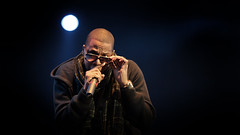
Jay-Z (Shawn Corey Carter) in concert -Image by NRK P3 via Flick
As I walked out of a store in Silver Spring, Maryland a few years ago, a 30 - something African American gentleman, tried to strike up a conversation with me. Unfortunately for him, the first words that came out of his mouth were, “excuse me, Miss Fufu…” to which I promptly interrupted, “I don’t eat fufu, I am not from Nigeria!”. I then continued to walk past him. His immediate response was apologetic,  “my bad … my apologies, I didn’t mean anything by it”.  Even though this misguided suitor’s intention was not to insult or do harm, his statement carried a lot of baggage. Firstly, his statement projected the stereotype in America that Africa was one country - and that country was Nigeria. Secondly, the idea that he thought I ate fufu because I looked African was misplaced. My denial about eating fufu to him did not stem from a desire to disassociate myself with African food, but rather a desire to be didactic about cultural truths. Having come from southern Africa, I was not too familiar with what exactly fufu was at that time, but I was able to locate it as a West African, specifically Nigerian dish. As I pondered on my drive home about stereotypes about Africa, a few thoughts about African stereotypes raced through my mind. His statement reminded me of how little Americans new about the continent and made me think about where there stereotypes originated. In brief, he had stereotyped me as a young, black, African female - I had become the new stereotypical African archetype, Miss Fufu.

It was during this same year that Jay-Z’s hit song “Girls, Girls, Girls” was playing on the airwaves. The line that stood out to me (and probably to impressionable stranger) when I first heard this song was:
I'm like: "excuse me Ms. Fufu, but when I met your ass
You was dead broke and naked, and now you want half"

These lines from Jay-Z play into popular stereotypes about Africa in a fundamental way. It speaks to popular stereotypes image of Africans being ‘poor’, ‘primitive’ and lacking ‘civilization’. Through this line, Jay-Z takes on the role of Kipling's ‘White Man’s Burden’ - civilizing his African girlfriend. He also becomes an oppressor of women because he feels that his wife is not entitled to half because of her country (continent) of origin – Sending a clear message that African women do not deserve to have material or emotional support because they are somehow not deserving of this because of an association with the stereotypes of ‘poverty’ or ‘coming from nothing’. These lyrics follow, and are a response to a preceding line in the song:

I got this African chick with Eddie Murphy on her skull
She like:"Jigga Man, why you treat me like animal?"

These lines preceding lines set up the players in the song, an African female that is somehow ‘wearing a (bone) skull’ of Eddie Murphy and whom is being treated like an animal by ‘Jigga man’ (another name for Jay Z). The description of the ‘skull wearing’ incidentally, is reminiscent of  his wife Beyonce’s infamous (and equally offensive) ‘tribute to Africa’ photo shoot where she dresses in black face and wears bones, animal print and tribal paint. For well traveled celebrities that have been to the continent (ie Tanzania, and South Africa), it seems that broadening of cultural horizons in the Knowles-Carter household, has so far served to reinforce stereotypes. This line is equally problematic because it plays in to power dynamics between the global North and Global South. Here, he presents himself as famous American rapper in a relationship with a poor African girl that he mistreats. It sends the message that African women are like animals, and such need to be treated accordingly. To show how his attitude translates in his everyday actions, it reminds me of a video that I saw years back of Jay-Z literally treating journalist/girl like an animal by physically assaulting (hitting) her for taking his photo (see Video:Jay-Z assaults African journalist). In some reports, critics have said this occurred in South Africa though this is unconfirmed. For young African women, this type of representation can be damaging at multiple levels ranging from domestic violence to paternalism. From a feminist perspective, it also reminds us of unequal gender roles in relationships. The African woman in this song gets oppressed (treated like an animal), for being female, black and African. The rest of this song is equally ethnically biased and misogynist because he proceeds to name racist and sexist stereotypes about women from all over the world. In fact in this song, no woman in this world is left untouched - the Latino woman who love cooking rice, the Chinese woman bootlegging his music, the African-American woman that snaps her fingers and swings her neck, the list goes on (See lyrics). So how did it come that Jay-Z thought it was okay to treat African women like an animals on video and in real life?

Greatest Comedy Hits
Eddie Murphy Image via Wikipedia
I found out later that with these lyrics, Jay Z was making reference to the famous comedy skit in ‘Raw’ done in the 1980’s by comedian Eddie Murphy (This was his tribute to Africa).  In this skit, Eddie Murphy recounts how he marries an African female from the 'bush' called ‘umfufu’ that he can control. This is a problematic stereotype about indigenous nomadic peoples and the nature of relationships in Africa. It feeds into the popular stereotype of the ‘submissive’ African woman and her stereotypical ‘abusive African man’ (She should be ‘used’ to being treated like that because that how African men treat their women!) Mr. Murphy’s comedy skit, unfortunately, was reproduced from comedy to music. Some may argue that it’s 'harmless' entertainment but the problem here is that in the entertainment industry through Hollywood, music, comedy etc... Africans are only portrayed in one way (backwards and uncivilized) and it is almost always negative. Nevertheless, the problem with ethnic comedy is that comedy is relies on stereotypes. In order for people to find a skit funny, they need to ‘understand’ the stereotype – they need to have a preconceived notion of the subject of the joke. In this case, it is obvious that Jay Z understood the joke based on his understanding on Africa. This is a clear example of how popular stereotypes about Africa are reinforced in mass media outlets like music and live ‘entertainment’ and transferred to the general American public. It is unfortunate that both Eddie Murphy and Jay Z have a large African fan base too. I find it unfortunate when Africans are forced to participate in their own stereotyping or when Africans can’t (or don’t) do more to protest against these offensive stereotypes on music stations like MTV Base (MTV Africa) and perhaps, Channel O. For some reason, when it comes to Africa, the entertainment industry in The U.S. thinks stereotyping is okay. These characterizations are than internalized by the American public, like the man in the store in Maryland. The stereotype is also used as a lens when commenting on the validity of Nomvuyo Mzamane's case against Oprah by another minority blog contributor on the Black Gay Gossip blog article, "Ms. fufu is Suing Oprah".

I love presents! Especially thoughtful ones fr...
Jay Zs bestselling book, "Decoded" Image by Urban Mixer via Flickr

A few weeks ago a flier advertising Jay Z’s book ‘decoded’ was sent to one of the teaching assistants (and faculty). The Amazon book review by Juliet Disparte reads “it is a rare glimpse of the unexpectedly deep meanings behind the most recognizable rap lyrics of the last decade”. In the growing wake of university courses that touch on Jay Z, I wondered what lessons Jay Z wanted me, as a young African female teaching assistant to convey to students about decoding his lyrics. I had first heard about the book on a promotional episode of “Oprah”, now I cant help but wonder in what manner Jay Z and Eddie Murphy would talk to the young ladies at her academy in South Africa there during there publicized philanthropy trips, “Excuse me, Ms Fufu? I donated school books, now you want half?